Radical Democracy and Its Limits by David Matijasevich
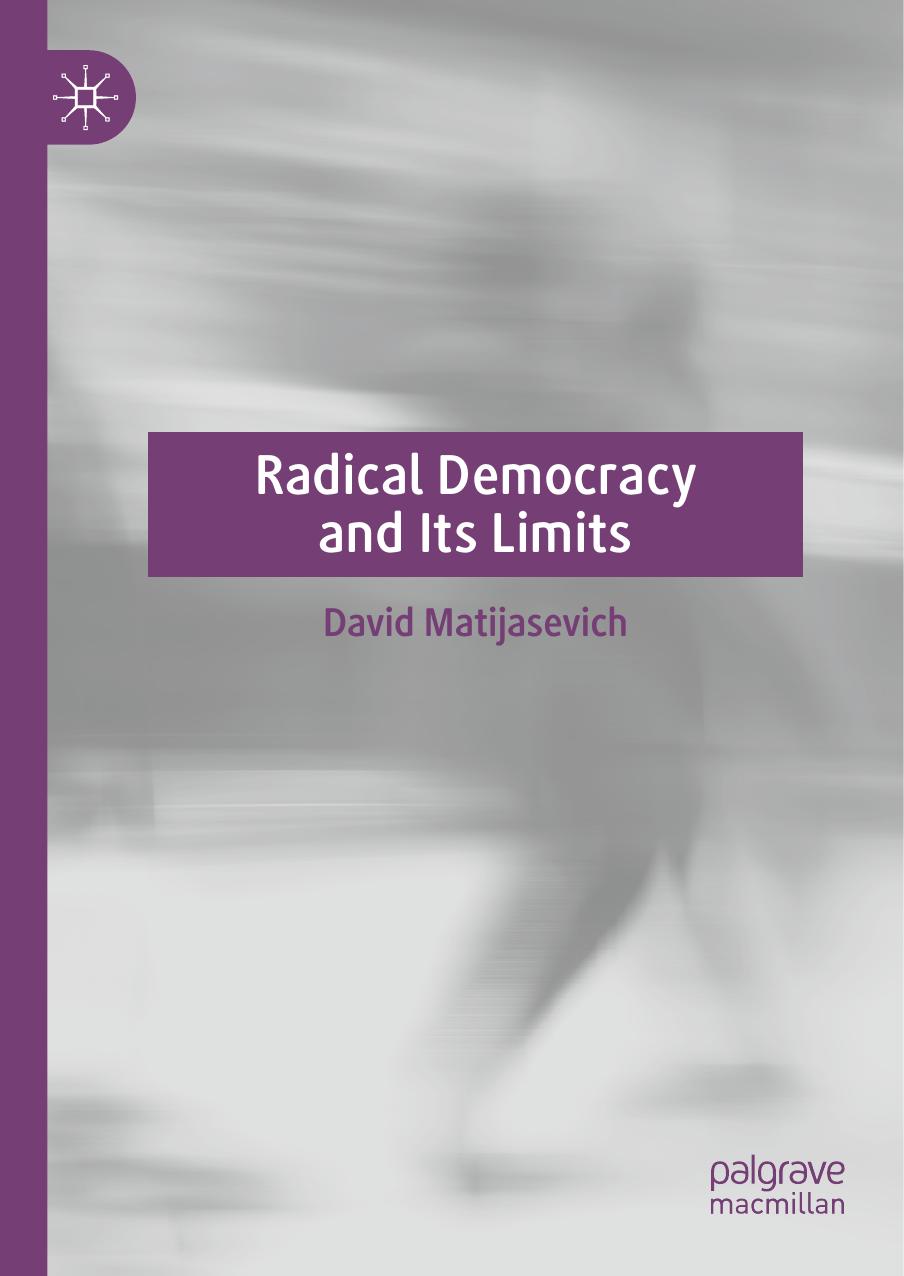
Author:David Matijasevich
Language: eng
Format: epub, pdf
ISBN: 9783030230142
Publisher: Springer International Publishing
The People’s Action Party and Its Discontents
When the PAP won the election in a landslide, capturing 43 of the 51 seats, Singapore was changed forever. Holding political power from this year onward, the effect that the PAP would come to have on Singapore was immense. As some have argued, the PAP and its leader Lee Kuan Yew have become inseparable from the “Singapore Story” itself (Koh, 2007). For scholars of the city-state, the 1960s are understood to be crucial years as many of the important developments that would stay with Singapore right up until the present occurred during the PAP’s first decade in power. For our purposes, this is no different as the 1960s marked, first, the return of significant radical democratic action against the PAP government and second, as their tenure stretched on, radical democracy’s disappearance through an effective closure orchestrated by the PAP.
Even before their election, the PAP had given some indication that political plurality was not something high on their agenda. Though they had promised to release the left-wing detainees that had been arrested in Lim’s purge, the new government only released those of political importance and forced these selected leaders to sign a document entitled “the ends and means of socialism” which committed them to the PAP cause as a condition of their release. This, however, did not deter these leaders from attempting to reorganize and redirect the unions and other associations they had been leading before the arrests (Lee, 2008).
The moderate PAP leaders, however, were unwilling to let this unfold. Though Lee and the moderates had spoken of democratic socialism in their appeals to the masses, the path to economic development that they wished to pursue involved controlling the workforce to increase production, austerity to increase savings for growth, and a policy of “industrial peace with justice”, all for the purpose of attracting multinational capital to state-directed projects (Turnbull, 2009). Fernandez and Loh state that some of the key pieces of legislation which looked to turn the unions into “partners of the establishment” were amendments to the trade unions ordinance which gave the government “vast powers to deregister unions deemed to be acting against workers’ interests” (Fernandez & Loh, 2008). Furthermore, in order to curb the number of strikes, the PAP moderates had included provisions for binding collective bargaining and arbitration processes—moves that shifted power away from labour to government appointed mediators. A rule against federating was also designed to ensure that grievances did not become taken up across trades, thus limiting the scope for sympathy stoppages. As a result of these developments, the left, who had once viewed Lee as a guarantor of their labour rights, began to have serious reservations about the path of authoritarian capitalist development he was taking the island down (Fernandez & Loh, 2008). During the PAP’s first several months in office, further criticisms were launched at Lee from the left, within his own party and beyond. The party’s top-down decision-making process, a failure to respect freedoms of the press,
Download
Radical Democracy and Its Limits by David Matijasevich.pdf
This site does not store any files on its server. We only index and link to content provided by other sites. Please contact the content providers to delete copyright contents if any and email us, we'll remove relevant links or contents immediately.
| Anthropology | Archaeology |
| Philosophy | Politics & Government |
| Social Sciences | Sociology |
| Women's Studies |
The remains of the day by Kazuo Ishiguro(9081)
Tools of Titans by Timothy Ferriss(8489)
Giovanni's Room by James Baldwin(7431)
The Black Swan by Nassim Nicholas Taleb(7193)
Inner Engineering: A Yogi's Guide to Joy by Sadhguru(6835)
The Way of Zen by Alan W. Watts(6669)
The Power of Now: A Guide to Spiritual Enlightenment by Eckhart Tolle(5854)
Asking the Right Questions: A Guide to Critical Thinking by M. Neil Browne & Stuart M. Keeley(5831)
The Six Wives Of Henry VIII (WOMEN IN HISTORY) by Fraser Antonia(5557)
Astrophysics for People in a Hurry by Neil DeGrasse Tyson(5224)
Housekeeping by Marilynne Robinson(4502)
Double Down (Diary of a Wimpy Kid Book 11) by Jeff Kinney(4332)
12 Rules for Life by Jordan B. Peterson(4331)
Ikigai by Héctor García & Francesc Miralles(4310)
The Ethical Slut by Janet W. Hardy(4306)
Skin in the Game by Nassim Nicholas Taleb(4305)
The Art of Happiness by The Dalai Lama(4167)
Skin in the Game: Hidden Asymmetries in Daily Life by Nassim Nicholas Taleb(4050)
Walking by Henry David Thoreau(3998)
